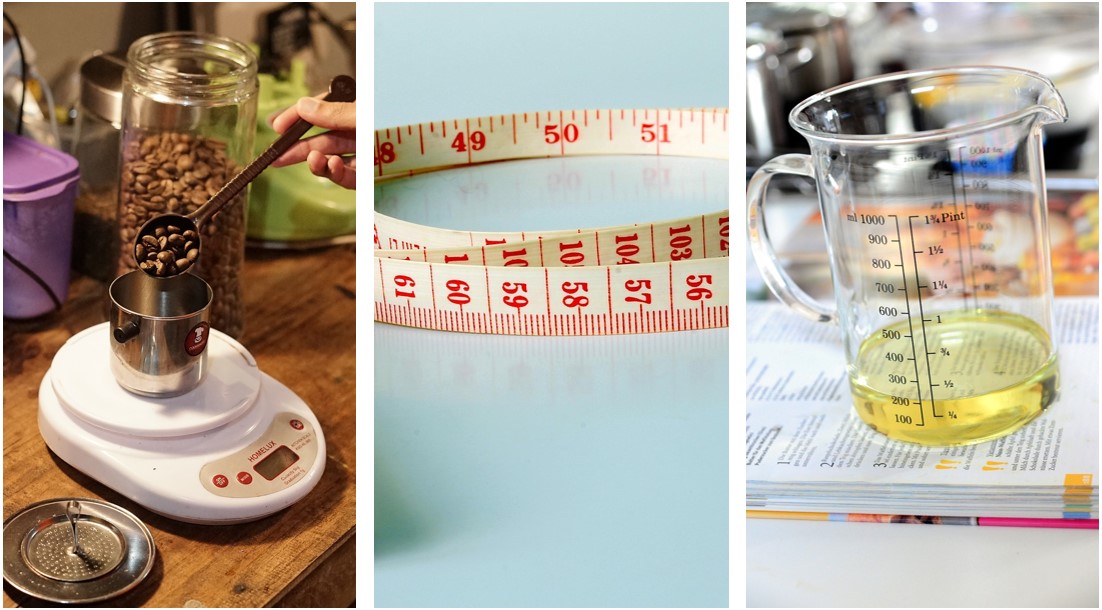
It could be argued that so far on our maths journey, we have looked at pure maths. Maths for maths’ sake if you like.
Of course, it is not just for the sake of it. The maths we have seen already goes a long way to underpinning our understanding and carrying out maths in more practical areas.
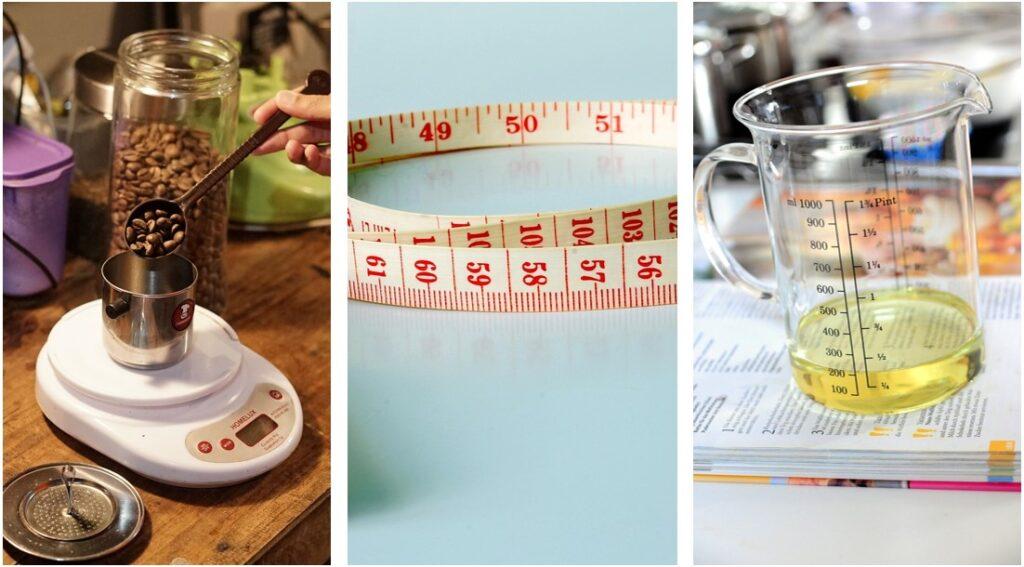
With that, let’s look at a maths topic that is practical. When we consider measures, we are putting all the skills of addition, subtraction, multiplication and division along with fractions, decimals and percentages to good use.
First, let us think about comparing and ordering objects according to their length, or mass, or volume/capacity. From an early age, learners are encouraged to get their hands on things to do this with. They will be given opportunities to discuss which tree is taller; which wall is longer; which bottle holds more water; which is heavier, a dog or a bird, and so on.
They will use language such as longer, longest, shorter, shortest, wider, widest, narrower, narrowest, heavier, heaviest, lighter, lightest, more than, less, greater than, less than, equal to…
Measuring using non-standard measures
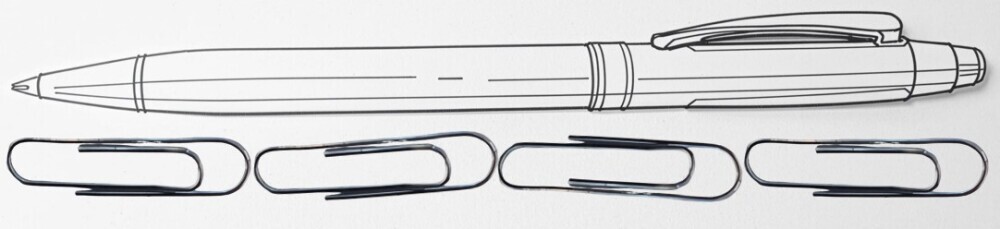
Initially, this is done using nonstandard measures. For example, in Year 1, this may include activities like finding out how many paperclips a range of objects measure. This has at least a twofold benefit. Learners begin to measure lengths in a way that is accessible and tactile. Using a familiar item like paper clips, learners begin to measure and compare lengths without the need to grasp the potentially abstract concepts of centimetres or millimetres.
Furthermore, handling the paper clips benefits the development of fine motor skills. Before they start, the simple question, “How many paper clips long is this pen?” gives rise to opportunities for estimating. Then, as they measure, counting skills are reinforced.
Recording the data collected is yet another way to increase familiarity with a range of mathematical ideas. Finally, the data thus recorded can be used to compare lengths with the use of the language discussed above. Later still, learners can begin to add and subtract length, mass and volume/capacity.
Later, standard units of measurement are introduced. Leaners are required to measure and record lengths and heights, mass/weight, capacity/volume, time, temperature. They do this with rulers, scales, thermometers and measuring vessels. They also need to be able to compare and estimate different measures.
Conversion between metric units
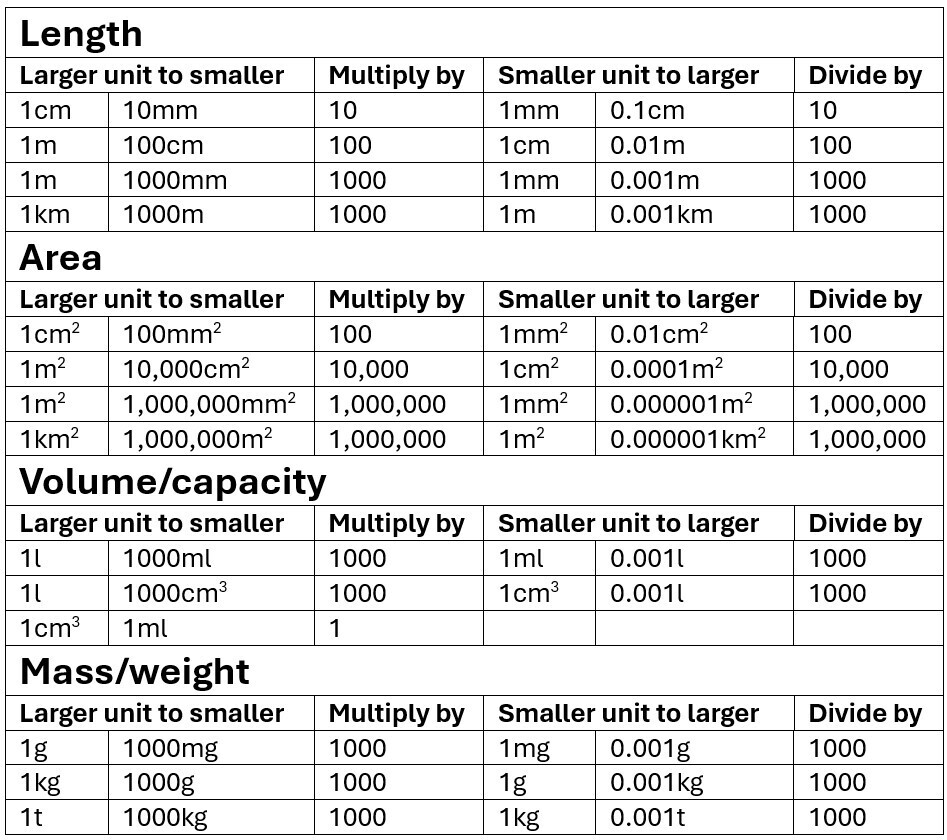
Learners are taught how to convert between metric units. This has real-life applications. For example, building drawings use millimetres as standard. It is important to be able to convert stated lengths to metres from drawn plans on a building site. For example, 3000mm = 3m.
In reverse, learners need to be comfortable using decimal notation with up to 3 decimal places. A measurement of a single millimetre when expressed in metres appears in the thousandths place – 1mm = 0.001m. 274mm is equal to 0.274m and so on.
Converting between units should not be confused with scaling. Plans drawn “to scale” need to be measured and then scaled up on-site. In school, learners are taught with drawn shapes whose sides are required to be scaled up or down by a given factor.
Convert between measurements in metric and imperial units
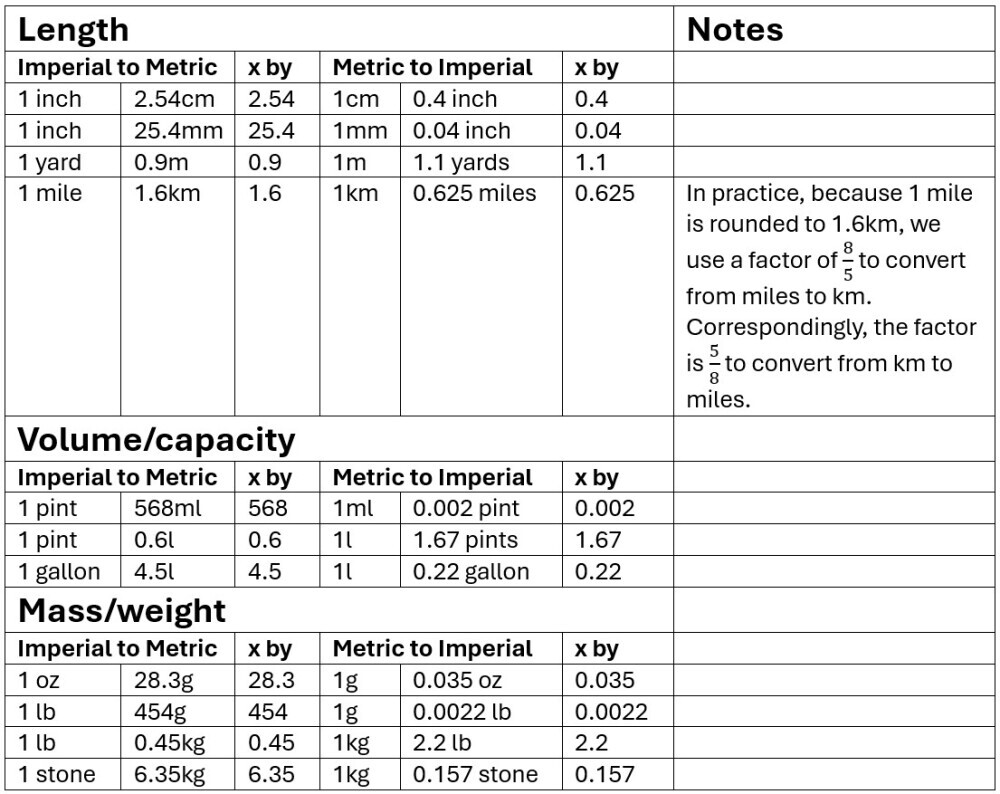
Older learners should know and use approximate equivalences between metric and imperial units. With our hybrid system of measure in the UK, this has implications for things like cooking at home. A recipe with ingredients quoted in imperial units may have to be measured out with a set of metric scales.
Perimeters of simple 2D shapes
This element moves from the understanding of how to measure the perimeter of rectangles and squares to the measurement of composite shapes made up of rectangles and squares with more than 4 sides.
Learners are required to know the properties of a circle, including the circumference, but not to measure or calculate it. They are only required to convert between radiuses and diameters. That is to say, the radius of a circle is half of its diameter. Also, its diameter is twice the radius.
This element also requires learners to understand that although area and perimeter are linked for rectangles, it is possible to have shapes with the same area, but different perimeters and vice versa.
Areas of 2D shapes
Initially, the areas of rectilinear shapes can be found by counting squares. Later, formulas are introduced to calculate the areas of rectangles and squares, parallelograms and triangles. Standard units cm2, m2 and km2 are used.
Volumes of 3D shapes
Estimate the volume using cubic centimetre (cm3) blocks and water for capacity. Formulas for working out the volume of cubes and cuboids are introduced. Therefore, learners can calculate, estimate and compare the volume of cubes and cuboids. The answers need to be given in standard units (cm3, m3 and km3).
Money
Learners need to know the value of different denominations of coins and notes. Understanding how to use symbols for pounds (£) and pence (p) is also necessary. To be clear, when amounts of money are expressed in pounds, there is no need to put ‘p’ at the end. It is important to remember that £1 = 100p and 1p = £0.01
Learners need to become comfortable with the UK’s currency. They can do this in a range of contexts. Perhaps the best way is using currency in real life. Early in their maths journeys, learners need to understand how to combine coins in different ways to find the same total.
Then they need to become comfortable with adding and subtracting amounts of money. Expressing and calculating amounts expressed in pounds helps greatly in understanding how to line up amounts in the correct columns. It can also help learners to grasp decimal numbers.
Finally, figuring out change from £5, £10, and £20 notes can help children learn when they don’t need to do lots of tricky steps in subtraction. Instead, they would be directed towards using number bonds to 100, 1000 and 2000.
The UK’s Currency:
Coins – 1p, 2p, 5p, 10p, 20p, 50p, £1 and £2
Bank notes – £5, £10, £20 and £50 (Bank of England); Scottish banks issue £1, £5, £10, £20, £50 and a £100 note; Northern Irish banks issue £5, £10, £20, £50 and £100 notes.
Time
Learners are taught how to sequence events using appropriate language. Earlier, now, later, before and after, next, first, today, yesterday, tomorrow, morning, afternoon and evening, quicker, slower, earlier, etc
Again, using appropriate vocabulary they compare and sequence intervals of time. Compare durations of events.
Learners are taught to estimate and read the time. They record using hours, minutes and seconds. Again, emphasis is placed on the correct vocabulary. For example, o’clock, past, to, a.m., p.m., morning, afternoon, etc
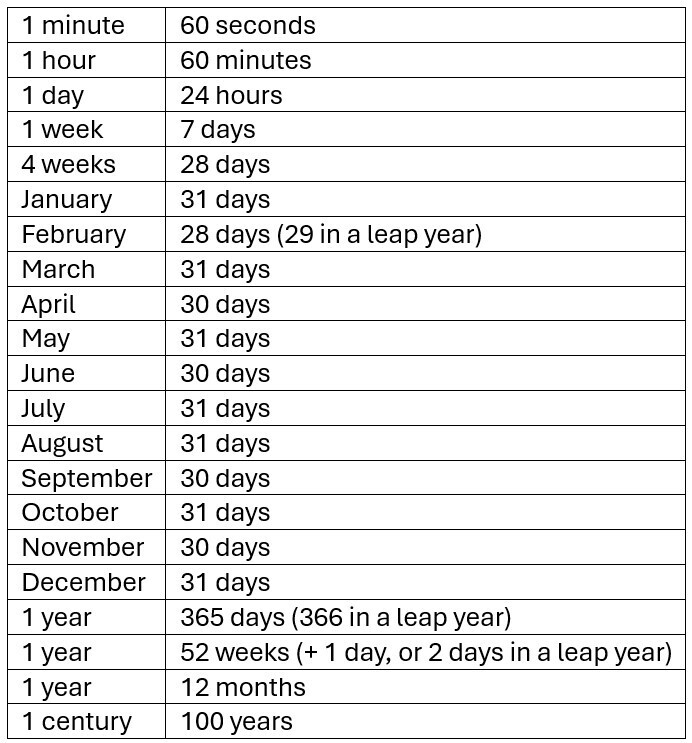
With time facts, learners convert between hours into minutes and back. They convert minutes to seconds and back; years to months and back; weeks to days and back. They learn to solve problems, calculating with time.
Learners are expected to tell and write the time to increasing levels of accuracy using an analogue clock. Telling the time like this is a tricky enterprise. It is best to begin with just the hour hand. Focus initially on the numbers 1 to 12 and count the hours only.
Start with the minute hand stationary, pointing at the 12 so that the time is o’clock. Then, move the shorter hand (the hour hand) and recite the o’clock times. 1 o’clock, 2 o’clock, 3 o’clock, etc.
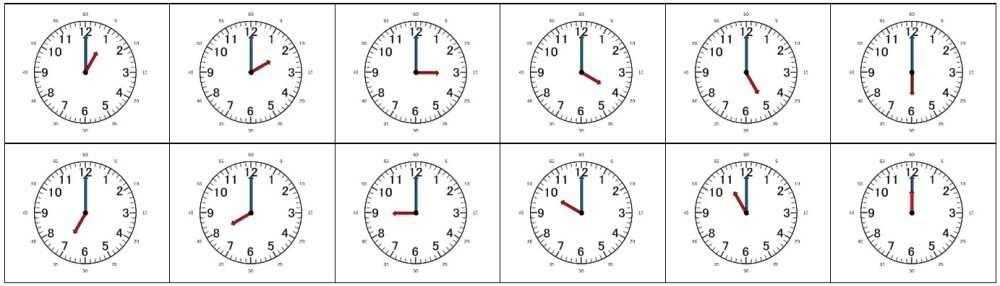
Next, introduce the idea that the minute hand moves also. Introduce half past. The sequence is now 1 o’clock, half past 1, 2 o’clock, half past 2, 3 o’clock, half past 3 etc.
Show that as the minute hand moves from the o’clock position to the half-past position, the hour hand only moves halfway between two numbers. From 1 o’clock to half past 1, the minute hand moves from the 12 to the 6, but the hour hand only moves halfway towards 2.
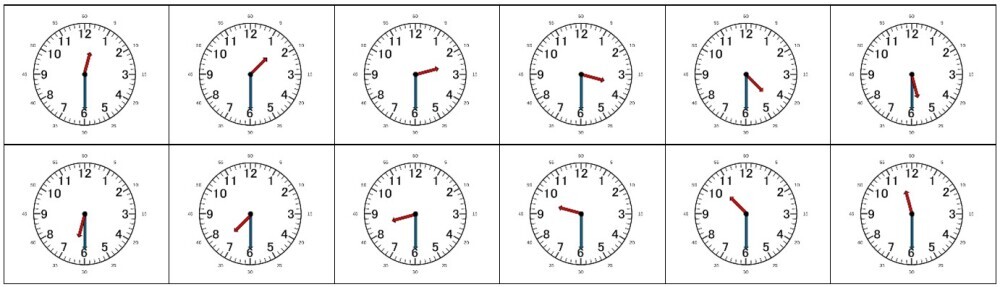
It is important to link the passage of time to events that learners have experienced. Children tend to have a poor understanding of the passage of time. Consequently, even half an hour is an interminably long time. You might relate half an hour as 2 episodes of your child’s favourite TV programme.
It should be explained that the minute hand goes all the way around the clock face every hour, while the hour hand moves from one number to the next. Show how each number on the clock face represents five minutes, so the minute hand takes 60 minutes to complete one full circle.
For example, when the minute hand is pointing at the 1, it means 5 minutes past the hour; at the 2, it means 10 minutes past the hour, and so on. Emphasize the importance of understanding both hands together to tell the exact time.
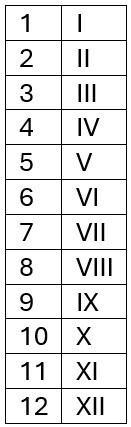
Use Roman numerals from I to XII
For a clock face, only numbers up to 12 are required. Only three Roman numerals are used. 1 = I; 5 = V and 10 = X.
Convert between 12-hour and 24-hour clocks
Learners need to be able to convert between 12-hour and 24-hour time. This is because the 12-hour clock can be ambiguous, especially if am or pm is not specified.
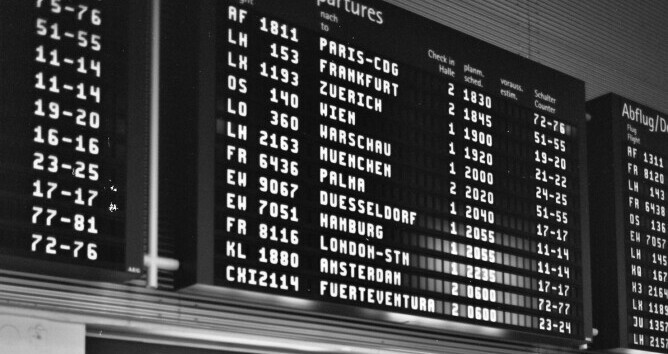
The 24-hour clock identifies every hour of the day without having to specify am or pm. This is especially important in situations where exact timing is critical. For example, bus or train timetables use 24-hour time so that users are clear when they need to be at the bus stop or train station.